
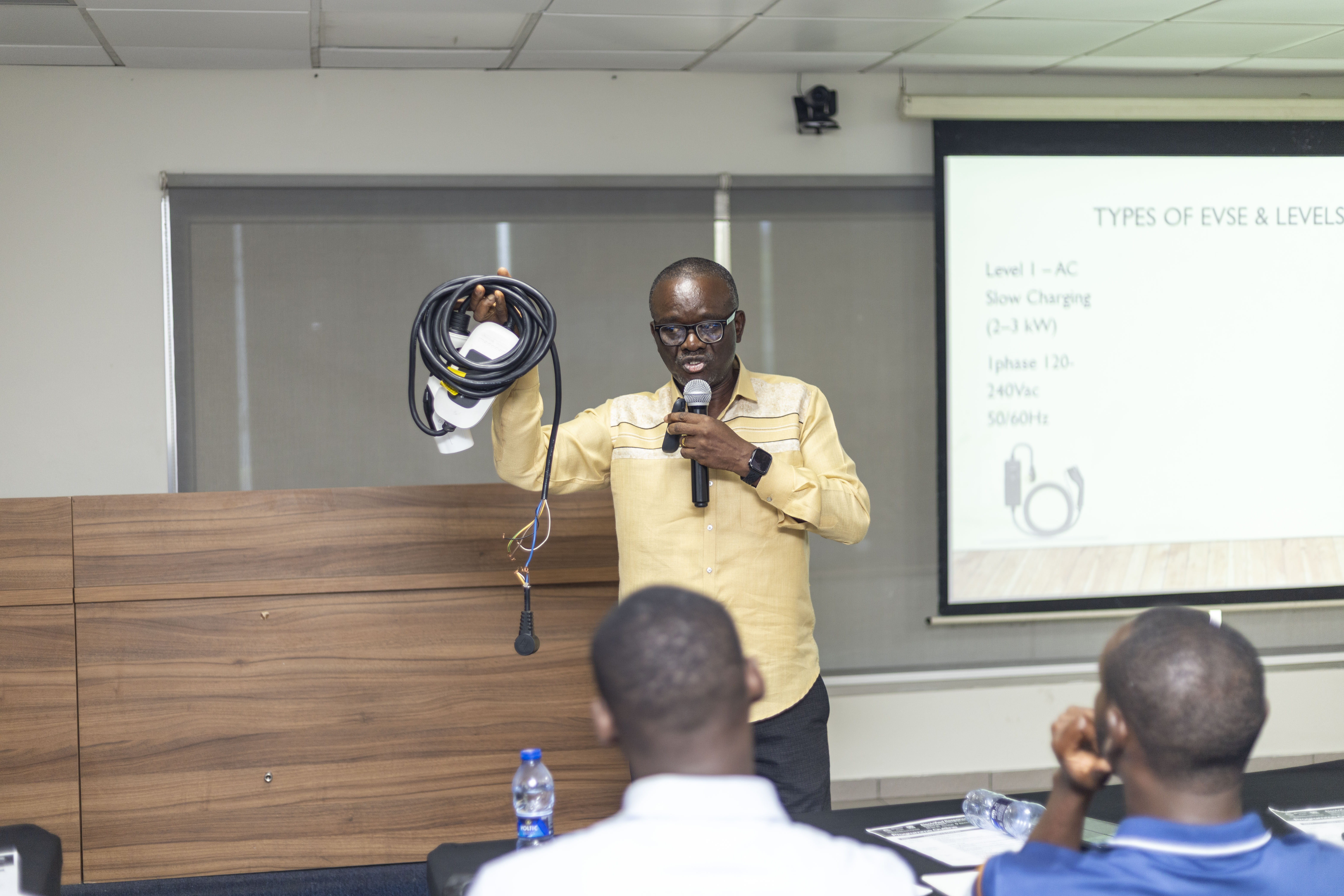
The Brew-Hammond Energy Centre (TBHEC) at the Kwame Nkrumah University of Science and Technology, Kumasi, in collaboration with the Climate Compatible Growth (CCG) Ghana Network, has organised a two-day “Electrified Response” training programme on Electric Vehicle (EV) safety and tactical operations for security and emergency responders.
The programme brought together stakeholders from the SmartTransyt Limited, Metro Mass Transit Limited, Sunyani Technical University, Koforidua Technical University, Ho Technical University, BOST Energies, Ghana National Fire Service, Environmental Protection Agency, DVLA, Ghana Revenue Authority (Customs Division), Public Utilities Regulatory Commission, Greater Accra Passenger Transport Executive, Land Use and Spatial Planning Authority, among others.
Leading the first technical session, Mr. Francis Elikplim Yao Teidzor, training instructor at Toyota Ghana took participants through the different types of EVs; Hybrid Electric Vehicles (HEV), Plug-in Hybrid Electric Vehicles (PHEV), Fuel Cell Electric Vehicles (FCEV), and Battery Electric Vehicles (BEV) and their core components.
He explained that the global transition to EVs is aimed at reducing carbon emissions.
“The ultimate goal is to achieve net-zero emissions by 2050,” he said.
Mr. Teidzor highlighted the key components of electric vehicles, including battery systems, electric motors, onboard chargers, and high-voltage electrical systems. He noted that while many Ghanaians are increasingly embracing EVs, it is equally important to raise awareness about proper usage and safety to ensure responsible adoption.
“People have embraced electric vehicles,” he said. “But safety awareness must grow at the same pace as adoption.”
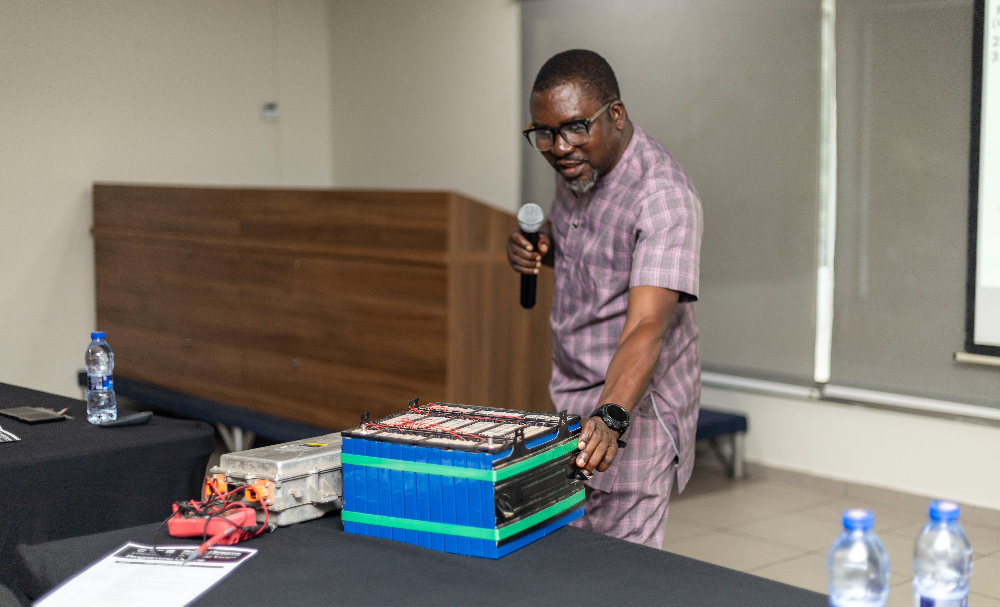
Mr. Odotei Kwao Odoi, a Certified Wiring Instructor at the Energy Commission, delivered a practical session on EV charging infrastructure and safety.
He cautioned against improper home installations, particularly the use of extension cables and unprotected sockets.
“If care is not taken, you will burn your house,” he warned. “EVs are good, but you must go through the right installation process.”
He explained the differences between Level 1 (slow AC), Level 2 (AC fast), and Level 3 (DC fast) chargers, stressing that frequent use of fast chargers can reduce battery lifespan.
“Research has shown that those who rely heavily on fast charging often experience faster battery degradation,” he noted. “Slow charging is like being on a hospital drip, it is gradual and protective,” he said
He also emphasised the importance of proper grid capacity, metering systems, and certified wiring, pointing out that some high-capacity charging stations require dedicated transformers.
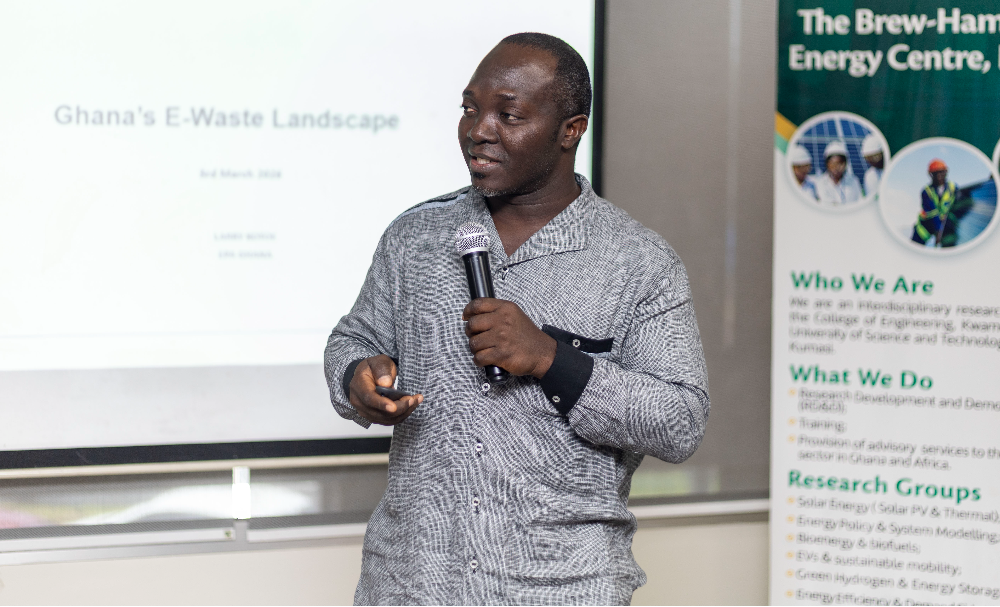
The programme also addressed Ghana’s growing electronic waste challenge. Mr. Larry Kotoe, Deputy Director (Petroleum) at the Environmental Protection Agency, presented data on Ghana’s household e-waste generation.
He revealed that Ashanti and Greater Accra Regions currently generate the highest volumes of household e-waste, and warned that Ghana could face up to about 2.8 million tonnes of e-waste if urgent action is not taken.
“We often underestimate how many electronic devices we keep at home. If you conduct a proper household inventory, you will be surprised at the numbers,” he said.
He highlighted the National Integrated E-Waste Management Scheme and existing electronic waste legislation, noting that permitted recycling companies are authorised to handle hazardous components such as lithium-ion and lead-acid batteries.
“There is a tendency to focus on the quick money from scrap components,” Mr. Kotoe said. “But we discount the environmental and health consequences. That short-term decision affects all of us in the long run.”
He stressed that EV batteries fall under electronic waste management frameworks and must be handled responsibly to protect communities, workers and the environment.
Institutions represented at the training included SmartTransyt Limited, Metro Mass Transit Limited, Sunyani Technical University, Koforidua Technical University, Ho Technical University, BOST Energies, Ghana National Fire Service, Environmental Protection Agency, DVLA, Ghana Revenue Authority (Customs Division), Public Utilities Regulatory Commission, Greater Accra Passenger Transport Executive, Land Use and Spatial Planning Authority, and others.
By: Abena Serwaa Gyamfi


